
Gold-plated replica watches are among the most visually striking options available, yet they are also one of the most misunderstood.
Questions about color accuracy, durability, and how long the finish will last are common—and often surrounded by vague or misleading claims.
In reality, gold plating is not just about appearance. It is a combination of material choice, plating process, thickness, and realistic expectations. Understanding how gold plating works helps explain why some watches age gracefully, while others show wear more quickly.
What Is Gold Plating?
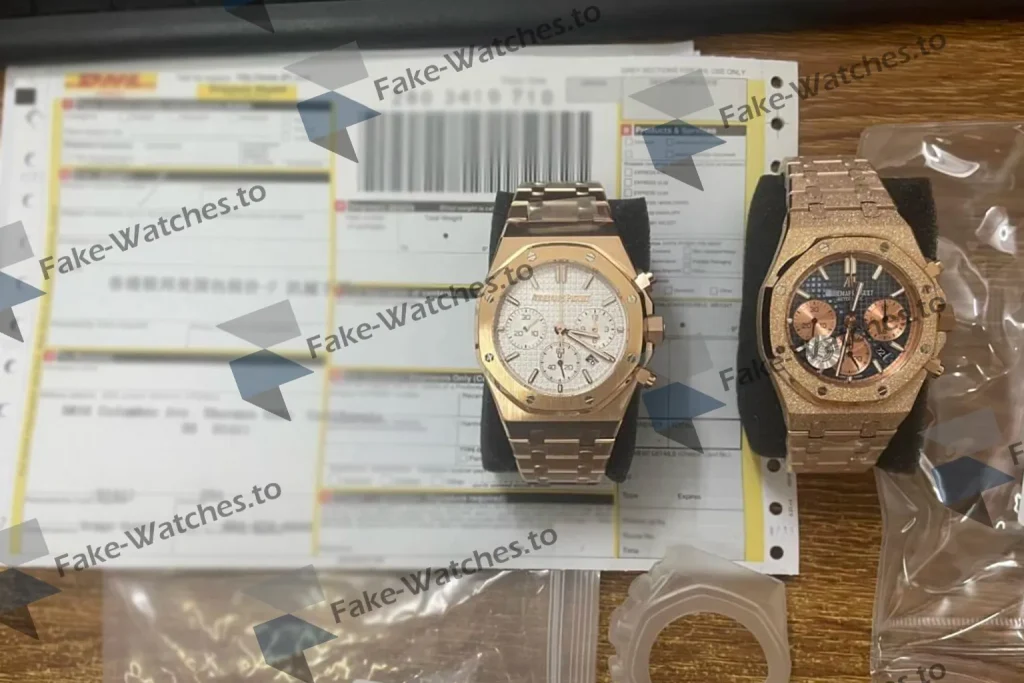
Gold plating is a surface finishing process in which a thin layer of gold is applied to a base metal, most commonly stainless steel.
Unlike solid gold replica watches, the underlying structure of a gold-plated watch remains steel; the gold exists only as a surface layer.
In replica watches, gold plating is used to replicate the appearance of yellow gold, rose gold, or other gold tones while keeping the replica watch lightweight and cost-effective.
Base Materials Used in Gold-Plated Replica Watches
Most gold-plated replica watches use stainless steel as the foundation, typically:
- 316L stainless steel
- 904L-style stainless steel
These steels are chosen because they are corrosion-resistant, structurally stable, and well-suited for electroplating or PVD-style coating processes. The quality of the base material plays a significant role in how well the gold layer adheres and how evenly it wears over time.
Gold Plating Color: Why Shades Differ
One of the most noticeable differences between gold-plated replica watches is color. Even among genuine gold watches, gold tones are not identical.
Factors That Affect Gold Color
Several elements influence the final appearance of a gold-plated watch:
- Gold alloy composition
Pure gold is rarely used on its own. Small variations in alloy content can shift the tone warmer, cooler, or slightly reddish. - Plating solution and process
Different chemical formulations produce different visual results. - Surface finishing underneath the plating
Polished, brushed, or matte surfaces reflect light differently, changing how the gold appears.
Common Gold Tones in Replica Watches
- Yellow gold – warm and classic, but varies from bright to muted
- Rose gold – softer tone with a copper influence
- Champagne gold – lighter, less saturated, and more subtle
Because color perception also changes under different lighting conditions, gold-plated watches may look slightly different indoors versus outdoors.
Gold Plating Thickness: Why It Matters
Thickness is the most important factor in determining how a gold-plated watch will wear over time.
Gold plating thickness is typically measured in microns (µm). The thicker the gold layer, the more resistant it is to friction, sweat, and gradual wear from daily use.
Gold Plating vs. Gold Flash
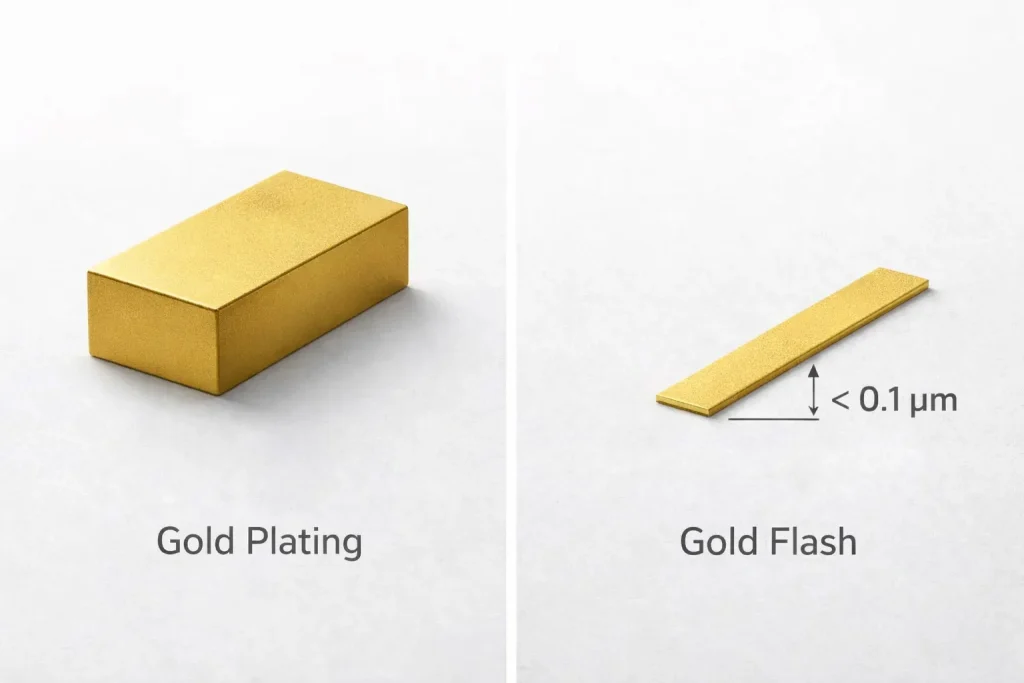
It is important to distinguish between true gold plating and what is commonly referred to as gold flash.
Gold flash is an ultra-thin decorative coating, often measuring less than 0.1 microns in thickness. It is applied primarily for visual effect rather than durability. Because of its minimal thickness, gold flash wears very quickly and is best suited for low-cost or purely decorative applications.
By contrast, higher-quality replica watches typically use standard gold plating, which applies a thicker gold layer to the surface. This results in better coverage, improved resistance to wear, and a more stable appearance over time.
In practical terms, lower-quality products often rely on gold flash, while higher-quality replica watches usually use gold plating to achieve a more durable and consistent finish.
Longevity: How Long Does Gold Plating Last?
Gold plating is not permanent. All plated finishes will change over time.
Factors That Affect Longevity
- Frequency of wear
Daily wear accelerates friction and exposure. - Skin chemistry and perspiration
Sweat can gradually break down plating. - Contact with hard surfaces
Desks, clasps, and other metal objects increase wear. - Care and storage habits
Areas Most Prone to Wear
- Bracelet links and inner clasp surfaces
- Case edges and lugs
- Crown and bezel edges
With careful, moderate use, gold plating can maintain an attractive appearance for a long time. With heavy daily wear, visible wear is a natural and expected outcome.
Common Misconceptions About Gold-Plated replica Watches
“18K Gold Plated Means It’s Thick”
Not necessarily.
“18K” refers to the purity of the gold used in the plating—not the thickness of the layer.
“Gold-Plated Watches Don’t Wear”
All plated surfaces wear over time. Scratch resistance and longevity depend on thickness, usage, and care—not marketing terminology.
“PVD or Wrapped Gold Is the Same as Solid Gold”
These are coating methods, not solid materials. They improve adhesion and consistency but do not eliminate wear.
How to Extend the Life of Gold Plating
While wear is inevitable, proper care can slow the process:
- Avoid repeated contact with hard surfaces
- Wipe the watch after wearing to remove moisture
- Rotate watches instead of wearing the same one daily
- Store in a dry, soft environment when not in use
These habits help preserve both appearance and finish.
Gold Plating vs. Gold Flash
| Feature | Gold Plating | Gold Flash |
|---|---|---|
| Coating Thickness | Relatively thicker gold layer | Ultra-thin decorative layer (often < 0.1 microns) |
| Primary Purpose | Balance between appearance and durability | Visual effect only |
| Wear Resistance | Moderate to good, depending on thickness | Very low; wears quickly |
| Longevity | Suitable for regular or moderate use | Short-term appearance; not designed for long-term wear |
| Typical Use | Higher-quality replica watches | Lower-cost or purely decorative products |
| Cost | Higher production cost due to thicker coating | Lower cost due to minimal gold usage |
| Aging Behavior | Gradual wear over time | Rapid fading and exposure of base metal |
The key difference between gold plating and gold flash is not appearance at first glance, but how the finish wears over time.
Who Should Choose a Gold-Plated Replica Watch?
Gold-plated replica watches are well-suited for those who:
- Appreciate the look of gold without the weight or cost
- Understand that plating changes over time
- Prefer rotating watches rather than wearing one daily
- Value aesthetics and experience over permanence
Final Thoughts
Gold plating is neither a flaw nor a shortcut—it is a deliberate material choice.
When understood correctly, it offers an attractive balance between appearance, cost, and wearability.
By understanding how color, thickness, and longevity work together, you can set realistic expectations and enjoy a gold-plated replica watch for what it is: a visual and experiential piece, not a permanent finish.