
When choosing a watch, most people focus on the movement, design, or brand heritage. However one of the most exposed and heavily used components is often overlooked—the watch crystal.
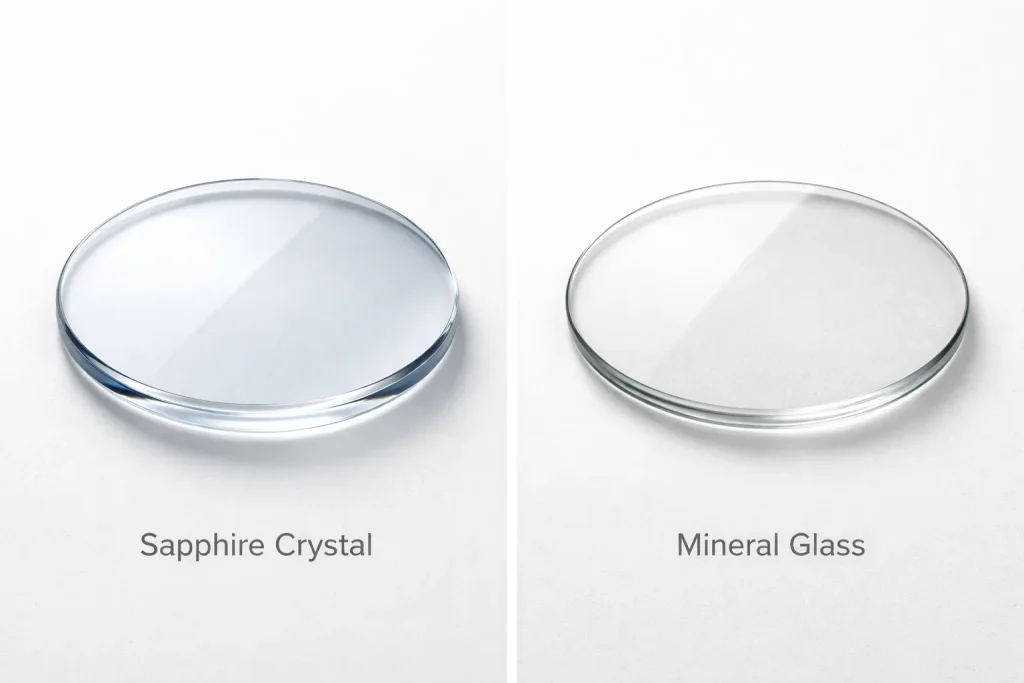
Nevertheless, the crystal plays a vital role—it protects the dial, affects legibility, and influences how a watch looks after years of wear. Today, most watches use one of two materials: sapphire crystal or mineral glass.
Understanding the difference between them helps explain why watches feel, wear, and last the way they do.
Why the Watch Crystal Matters More Than You Think
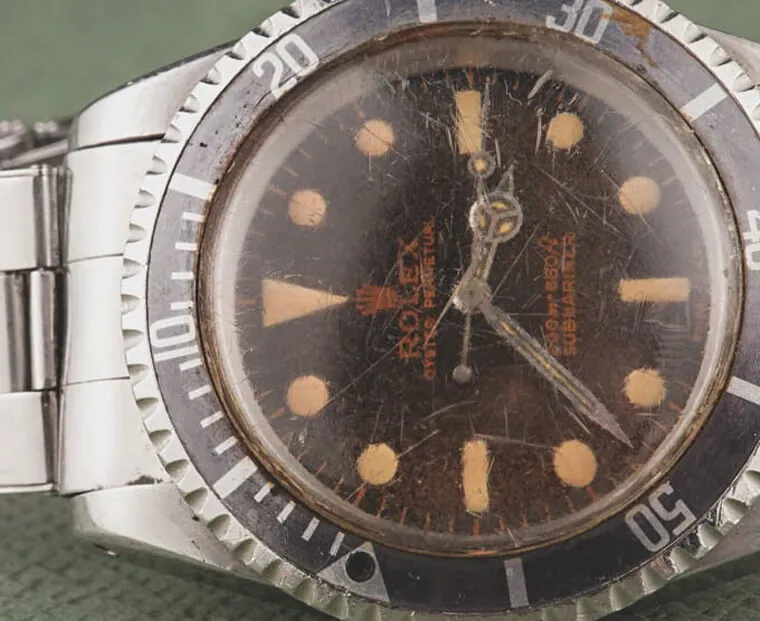
In everyday use, The watch crystal is the first line of defense against daily wear. It faces constant exposure to:
- Scratches from keys, desks, and sand
- Accidental impacts and drops
- Light reflections that affect readability
Over years of use, the condition of the crystal often determines whether a watch still looks clear and refined—or visibly worn. Material choice, therefore, is not a minor detail, but a functional design decision.
What Is Sapphire Crystal?
Despite its name, sapphire crystal is not glass in the traditional sense.
It is made from synthetic aluminum oxide, the same material family as natural sapphire gemstones. In watchmaking, sapphire crystal is grown in controlled environments and precision-cut for use as a crystal.
Because of its exceptional hardness and optical clarity, sapphire crystal is widely used in:
- Mid to high-end watches
- Professional and luxury timepieces
- Applications where scratch resistance is critical
What Is Mineral Glass
Mineral glass is a hardened form of traditional glass, typically based on silica. Through thermal or chemical strengthening processes, it becomes significantly tougher than ordinary glass.
This material is widely used in:
- Entry-level and mid-range watches
- Tool watches and sport models
- Products where impact resistance and cost efficiency matter
Mineral glass is familiar, practical, and proven across many industries beyond watchmaking.
Key Differences Between Sapphire Crystal and Mineral Glass
| Feature | Sapphire Crystal | Mineral Glass |
|---|---|---|
| Scratch Resistance | Extremely high; highly resistant to scratches from daily objects | Moderate; more prone to surface scratches over time |
| Mohs Hardness | ~9 | ~5–6 |
| Impact Resistance | Hard but more brittle; may crack under sharp impact | Softer but tougher; better at absorbing shocks |
| Optical Clarity | High purity; supports anti-reflective coatings well | Clear but more reflective under strong light |
| Long-Term Wear | Maintains clarity for years; rarely scratches | Shows visible wear with long-term daily use |
| Maintenance & Repair | Replacement required if broken; higher cost | Lower replacement cost; easier to service |
| Cost & Positioning | Higher production cost; used in mid to high-end watches | Cost-efficient; common in entry-level and tool watches |
Which Crystal Is Right for You?
- Daily wear and office use
Sapphire crystal offers lasting clarity and a refined appearance. - Active, outdoor, or high-impact environments
Mineral glass provides better shock tolerance and practical durability. - Entry-level vs. long-term ownership
Mineral glass works well for value-focused watches; sapphire crystal excels for long-term use.
Common Misconceptions
- “Mineral glass is low quality.”
Not true—it is a deliberate choice for toughness and cost efficiency. - “Sapphire crystal never breaks.”
Scratch-resistant does not mean unbreakable. - “Anti-scratch means no wear at all.”
All materials age; the difference lies in how they age.
Final Thoughts
Sapphire crystal and mineral glass are not simply “premium” versus “basic.” They are two solutions optimized for different priorities.
Sapphire crystal prioritizes scratch resistance, clarity, and long-term appearance. Mineral glass emphasizes impact resistance, practicality, and accessibility. Neither is universally better—only more suitable for specific needs.
Understanding this distinction allows you to choose a watch not just for how it looks today, but for how it will perform years from now.