
In modern watch design, the bezel is one of the most exposed components of a watch.
It sits at the edge of the case, protecting the crystal and framing the dial. Because of its position, the bezel is constantly subjected to impacts, friction, and environmental exposure.
Today, ceramic and aluminum are the two most commonly used bezel materials. While they may appear similar at first glance, they behave very differently over time. Understanding these differences helps explain how a watch ages, wears, and maintains its appearance in daily use.
Why Bezel Material Matters in Daily Wear
Unlike the case or bracelet, the bezel sits at the outermost edge of the watch. As a result, it is constantly exposed to:
- Accidental knocks and impacts
- Friction against desks, doors, and surfaces
- Sunlight, moisture, and temperature changes
Over time, these factors influence not only how a watch looks, but how it feels and ages. The material used for the bezel directly affects how wear appears and how easily it can be managed.
What Is a Ceramic Bezel?
Ceramic bezels used in watchmaking are not made from traditional household ceramic.
They are produced from high-tech materials, typically zirconium oxide, formed and sintered at extremely high temperatures.
The result is a material that is exceptionally hard and highly resistant to surface scratches. Because the color is integrated into the material itself rather than applied as a surface coating, ceramic bezels tend to maintain their appearance over long periods of use.
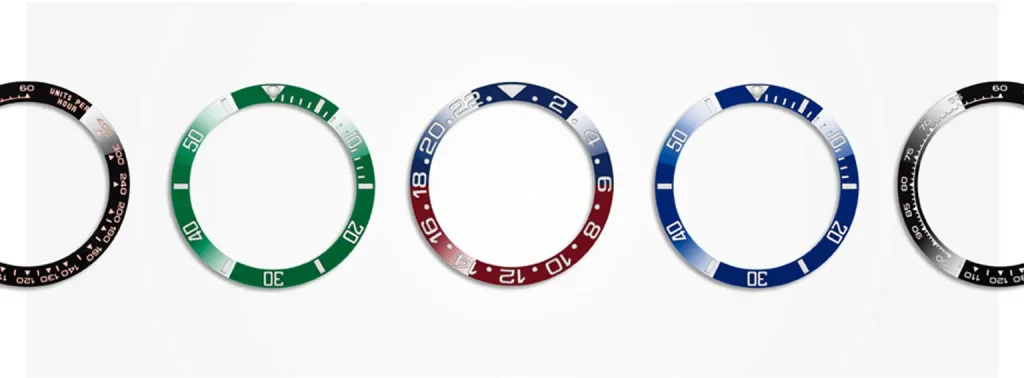
Common characteristics of ceramic bezels include:
- Very high scratch resistance
- Excellent color stability
- A smooth, glossy surface finish
These qualities have made ceramic bezels increasingly popular in modern sports and luxury watches.
What Is an Aluminum Bezel?
Aluminum bezels are typically made from lightweight metal that undergoes anodization, a process that hardens the surface and allows color to be applied.
Compared to ceramic, aluminum is softer and more forgiving under impact. However, because the color exists primarily in the anodized surface layer, aluminum bezels are more susceptible to visible wear over time.
Common characteristics of aluminum bezels include:
- Lightweight construction
- Matte or satin surface texture
- Greater susceptibility to scratches and fading
Despite these traits, aluminum remains widely used due to its practicality and distinctive aging behavior.
Scratch Resistance and Impact Behavior
One of the most frequently misunderstood aspects of bezel materials is the difference between hardness and toughness.
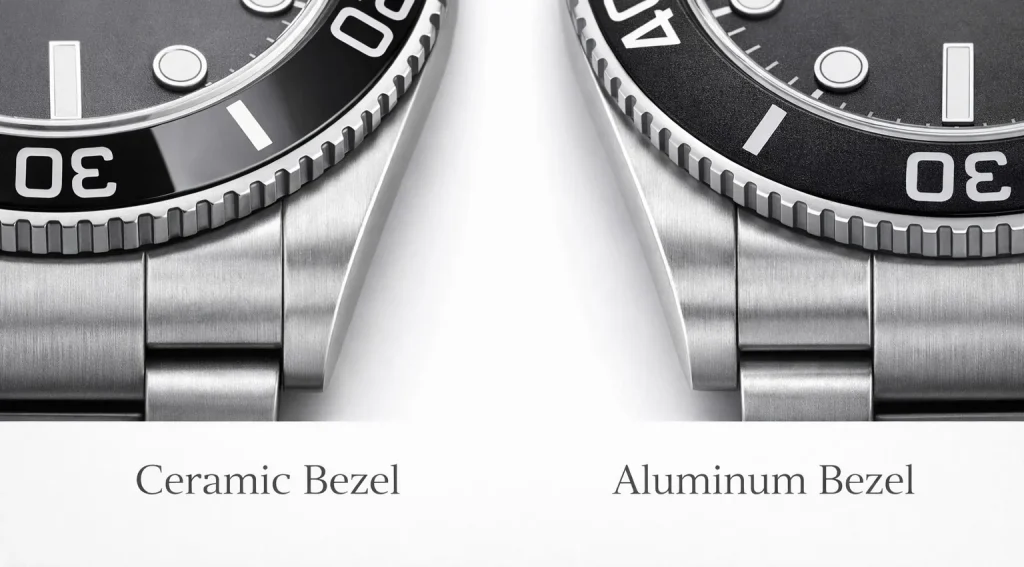
Ceramic bezels are extremely hard, which makes them highly resistant to everyday scratches. However, this hardness also means they are more brittle. Under a sharp or concentrated impact, a ceramic bezel may crack or chip.
Aluminum bezels, on the other hand, are softer and more likely to show surface scratches. At the same time, they are generally better at absorbing impacts without structural damage.
In practical terms:
- Ceramic resists scratches but may be vulnerable to severe impacts
- Aluminum scratches more easily but rarely shatters
Scratch resistance does not necessarily equate to impact resistance.
Color Stability and Long-Term Aging
The way a bezel ages is one of the most noticeable differences between ceramic and aluminum.
Ceramic bezels tend to retain their original color and finish for many years. They do not oxidize or fade under sunlight, and their surface appearance changes very little with regular use.
Aluminum bezels, by contrast, often develop visible aging:
- Colors may fade over time
- Scratches and wear marks become part of the surface
- The bezel may develop a softer, more worn appearance
Some wearers appreciate this gradual aging, especially in tool watches or vintage-inspired designs.
Readability and Visual Character
Material choice also affects how a bezel interacts with light.
Ceramic bezels often feature a high-gloss finish that enhances contrast and sharpness. However, this can sometimes result in reflections under strong lighting.
Aluminum bezels typically have a more muted, matte appearance, which can reduce glare and create a softer visual effect. This difference influences not only readability, but also the overall character of the watch.
Maintenance and Replacement Considerations
From a maintenance perspective, the two materials differ in practical ways.
Ceramic bezels generally require little maintenance, as they resist scratches and discoloration. However, if damaged, they usually require full replacement, which can be more costly.
Aluminum bezels may show wear more quickly, but they are often easier and less expensive to replace. In some cases, wear is considered acceptable or even desirable, reducing the need for replacement altogether.
Ceramic and Aluminum Bezel Comparison
| Feature | Ceramic Bezel | Aluminum Bezel |
|---|---|---|
| Scratch Resistance | Very high | Moderate |
| Impact Behavior | Hard but more brittle | Softer, more forgiving |
| Color Stability | Excellent | Prone to fading |
| Aging Appearance | Stays visually clean | Develops visible wear |
| Surface Finish | Glossy | Matte or satin |
| Replacement Cost | Higher | Lower |
Choosing the Right Bezel Material
The choice between ceramic and aluminum bezels often comes down to how a watch is worn and what kind of aging is preferred.
Ceramic bezels are well suited for those who value long-term visual consistency and scratch resistance. Aluminum bezels may appeal to wearers who prefer a lighter feel and are comfortable with visible signs of use over time.
Neither option is inherently superior; each reflects a different approach to durability and design.
Common Misconceptions About Bezel Materials
- Ceramic bezels do not scratch easily, but they are not unbreakable
- Aluminum bezels showing wear does not indicate poor quality
- Aging and patina are not necessarily defects, but characteristics of material choice
Understanding these nuances helps set realistic expectations for long-term ownership.
Final Thoughts
Ceramic and aluminum bezels represent two distinct philosophies in watchmaking.
Ceramic prioritizes surface durability and visual stability.
Aluminum emphasizes practicality, lighter weight, and a more visible aging process.
The real difference lies not in which material is “better,” but in how each one evolves with use—and how that evolution aligns with the wearer’s expectations.